Best Time to Visit Hilo Waterfalls: Month-by-Month Guide

Planning a visit through our Hilo Hawaii waterfalls resource? The best time to visit Hilo waterfalls is November through April, when wet-season rain keeps Rainbow Falls, ʻAkaka Falls and the Wailuku River running at full power, and a morning arrival lines you up with the rainbow window in the mist below the falls. I've guided hikes here through every month of the year, and the honest version is that there is no bad month to see a Hilo waterfall, only a best window and a runner-up. June through August brings the driest trails and the easiest logistics for families, at the cost of a noticeably thinner flow after a dry spell. Whatever month lands on your calendar, the falls are fed by rain falling far above town on Mauna Kea, so a soggy forecast down here is often the best possible news for what you'll find when you get there.
Quick answer
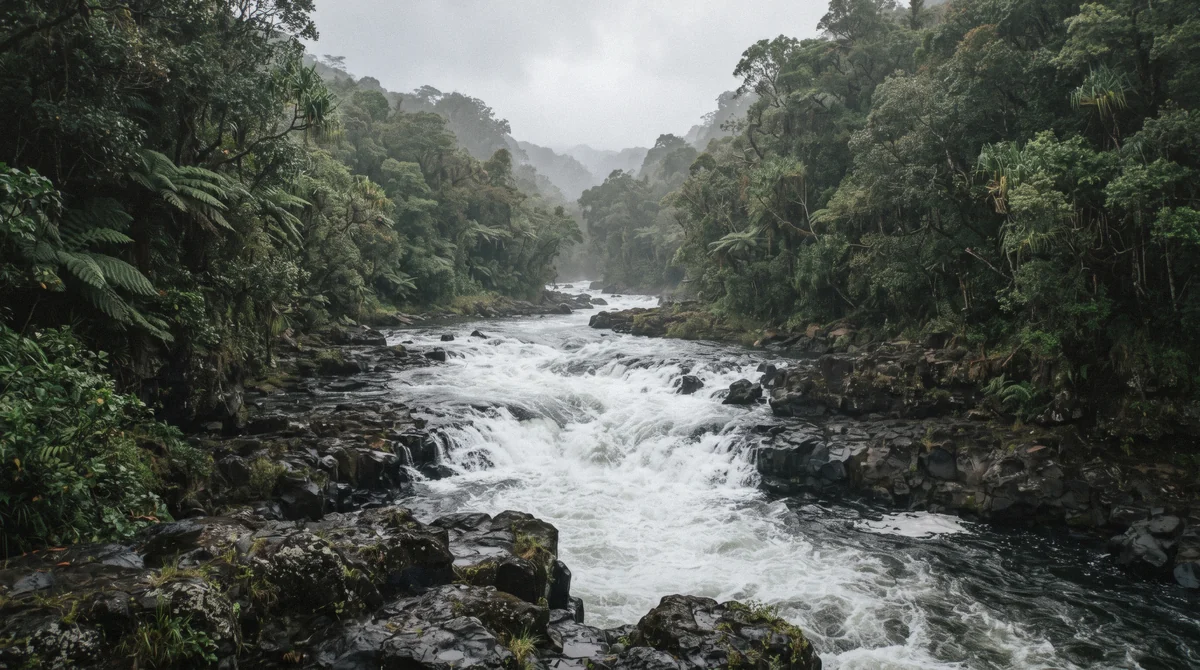
The best time to visit Hilo waterfalls is November through April, the wet season, when consistent rain on Mauna Kea keeps the Wailuku River and every fall it feeds running at full strength. June through August is the honest runner-up: drier trails and easier logistics for families, but flow can thin noticeably after a dry stretch.
Key takeaways
- November through April is the best window, driven by consistent upland rain that keeps the falls at full flow
- June through August is the runner-up, trading some waterfall power for drier trails and simpler family logistics
- Late November into December brings the heaviest multi-day kona downpours, still fine for waterfall viewing, harder on everything else
- Rain is the engine here, not the enemy: a wet night up on Mauna Kea often means the fullest falls the next morning
- 9:00 to 10:00am is the best window for the Rainbow Falls mist rainbow, and it beats the mid-morning cruise-bus crowd
- The one date to plan around is Merrie Monarch week, the week after Easter, when Hilo hotels sell out and tours book solid
Seasons at a Glance
Read the Verdict column first if you're short on time, then use the two tables below it for the specifics behind each call.
| Month | Waterfall flow | Weather | Crowds | Verdict |
|---|---|---|---|---|
| January | Strong, wet-season base | Mild, frequent showers | Moderate, holiday tail | Strong flow, easy going |
| February | Strong | Mild, showery | Moderate, thins mid-month | Strong flow, fewer crowds |
| March | Near peak | Wet, warming, wettest week during the festival | Rising, Merrie Monarch week | Peak flow, festival crowds |
| April | Strong, holdover from March rain | Warm, showery | Moderate | Strong flow, good balance |
| May | Moderating | Warmer, drier | Lower, shoulder pricing | Good flow, shoulder pricing |
| June | Thinner after dry spells | Driest stretch of the year begins | Family and school crowds pick up | Driest trails, thinner flow |
| July | Rebounding with trade showers | Warm, brief afternoon showers | Peak family season | Rebounding flow, family season |
| August | Rebounding, warm-season showers | Hottest stretch of the year | Peak family season | Rebounding flow, warm and busy |
| September | Good, steady | Warm, quieter skies | Lower, shoulder season | Steady flow, quiet shoulder |
| October | Good | Warm | Lower, easing further | Steady flow, easing crowds |
| November | Strongest of the year | Wettest month, kona storms possible | Lower, pre-holiday lull | Peak flow, pack a shell |
| December | Strong | Wet, mild | Rising toward the holidays | Strong flow, book ahead |
November stands out as the wettest, fullest month, with March close behind thanks to the same rain that brings Merrie Monarch week crowds. June is the outlier on the dry side, the one month where I tell people to expect a thinner Rainbow Falls after a dry stretch.
Typical Temperatures and Rainfall
These are typical highs, lows and rainfall totals for downtown Hilo, not guarantees for any single day. Actual weather on your dates can and does run warmer, cooler, wetter or drier than the pattern below.
| Month | Typical high | Typical low | Rain |
|---|---|---|---|
| January | 79°F | 64°F | 10.3 in |
| February | 79°F | 64°F | 10.3 in |
| March | 79°F | 65°F | 15.0 in |
| April | 80°F | 66°F | 14.2 in |
| May | 81°F | 66°F | 9.7 in |
| June | 82°F | 67°F | 8.5 in |
| July | 83°F | 68°F | 12.0 in |
| August | 84°F | 69°F | 11.3 in |
| September | 84°F | 69°F | 11.3 in |
| October | 83°F | 68°F | 11.0 in |
| November | 81°F | 66°F | 16.7 in |
| December | 79°F | 64°F | 11.7 in |
August and September run the warmest, with January and February the coolest, while November is the wettest month by a clear margin. Downtown Hilo averages around 142 inches of rain a year, one of the wettest totals of any city in the United States, though the rain tends to arrive as overnight and passing showers rather than full washout days. Figures above come from the University of Hawaiʻi Rainfall Atlas, and since averages hide a lot of day-to-day swing, it's worth checking the National Weather Service forecast once your dates get close.
Best Season by Traveler Type
If a photographer
come November through March and head out in the morning after an overnight rain, the combination that gives you the fullest falls and mist for the Rainbow Falls rainbow.
If traveling with young kids
aim for June through August, when trails are driest and the logistics of a hot, tired kid on a slick path matter less.
If visiting Hilo for the first time
book April or May, with strong leftover flow from the wet season and noticeably thinner crowds than the summer peak.
If traveling on a tighter budget
look at April to May or September to October, the shoulder windows when airfare and hotels tend to run cheaper even though tour prices themselves barely move by season.
If arriving on a cruise ship
worry less about the month and more about the hour, since an early tour departure beats the mid-morning crowd at Rainbow Falls in any season.
Winter (November to February): The Falls at Full Power
Winter is when Hilo earns its rainy reputation, and also when the waterfalls look their best. November alone averages close to 17 inches of rain, and the kona storms between late November and January can bring a full multi-day soaking. The upside: the Wailuku River runs at its fullest of the year, Rainbow Falls carries real volume even by mid-afternoon, and ʻAkaka Falls thunders rather than trickles.
Daytime highs sit around 78°F, cool enough that what you pack matters more than in any other season. For a full day pairing the falls with the volcano and a black sand beach, the Volcano National Park & Rainbow Falls day tour runs through the wet season without missing a beat.
- Typical highs near 78°F, with the year's heaviest rain
- Waterfall flow at or near its yearly peak
- Crowds moderate, thinning out after the holidays
- A rain shell earns its keep more than any other month
Spring (March to May): Strong Flow, Merrie Monarch Week
March is the second-wettest month on the chart, averaging around 15 inches of rain, so the falls carry serious volume straight through the start of spring. The one date to plan around is Merrie Monarch week, the week after Easter, when hula halau from across the state converge on Hilo for the festival. Hotels sell out and tour slots go fast, so book early if your dates land that week.
By April and May the rain eases, but the ground and rivers are still carrying the wet season's flow, which is why I tell most first-time visitors to aim for this window: strong falls, crowds well below the summer peak. The Hilo volcano, waterfalls and beach tour covers Kawainui Falls and Rainbow Falls on the same day as Kīlauea, a good fit for this stretch.
- March averages around 15 inches of rain, the year's second-wettest month
- Merrie Monarch week (the week after Easter) sells out Hilo hotels, book early
- April and May carry over strong flow as the rain begins to ease
- Crowds stay below the summer peak through most of spring
Summer (June to August): Driest Trails, Family Season
June is the driest month on the island's own rain gauge, averaging around 8.5 inches, and it's the one month I'll tell you honestly to expect a thinner Rainbow Falls if the weeks before your visit have been dry. The trade-off is real: paved loop trails at ʻAkaka Falls stay drier and less slick, and the visit gets simpler with kids in tow. Rain picks back up some in July and August with the season's trade showers, helping flow rebound without winter's volume.
School-break crowds are at their highest of the year in this window. It's also swim season: waterfall pools stay a consistent 65 to 70°F no matter the month, so it's the drier trails that make summer the pick, not the water. For the one legal waterfall swim on this list, the waterfall hike and swim with a native Hawaiian guide runs on private trails and includes food and drinks.
- June averages the year's lowest rainfall, around 8.5 inches
- Expect a thinner Rainbow Falls after any extended dry stretch
- July and August trade showers help the flow rebound some
- Trails are at their driest and least slick all year
Fall (September to October): The Quiet Shoulder
September and October are the stretch I point budget-minded travelers toward. Daytime highs hover in the low 80s, rainfall sits in the middle of the yearly range at 11 inches or so a month, and the summer school-break crowd has gone home before the November rains bring the next wave of wet-season visitors. Flow is decent without being dramatic, closer to what April delivers than what November does.
Airfare and hotel rates in this shoulder tend to run cheaper than summer or the December holidays, even though tour pricing itself barely shifts by season. A half-day format works well here since afternoon showers are less of a factor than in winter. The Big Island half-day volcano and waterfalls tour runs morning departures that pair Rainbow Falls with the lava tube and a black sand beach before lunch.
- Highs in the low 80s, among the year's warmest
- Rainfall in the middle of the yearly range, around 11 inches a month
- Crowds at their lowest of the year outside of true off-peak weeks
- Airfare and hotel rates often cheaper than summer or the holidays
What Actually Affects the Flow
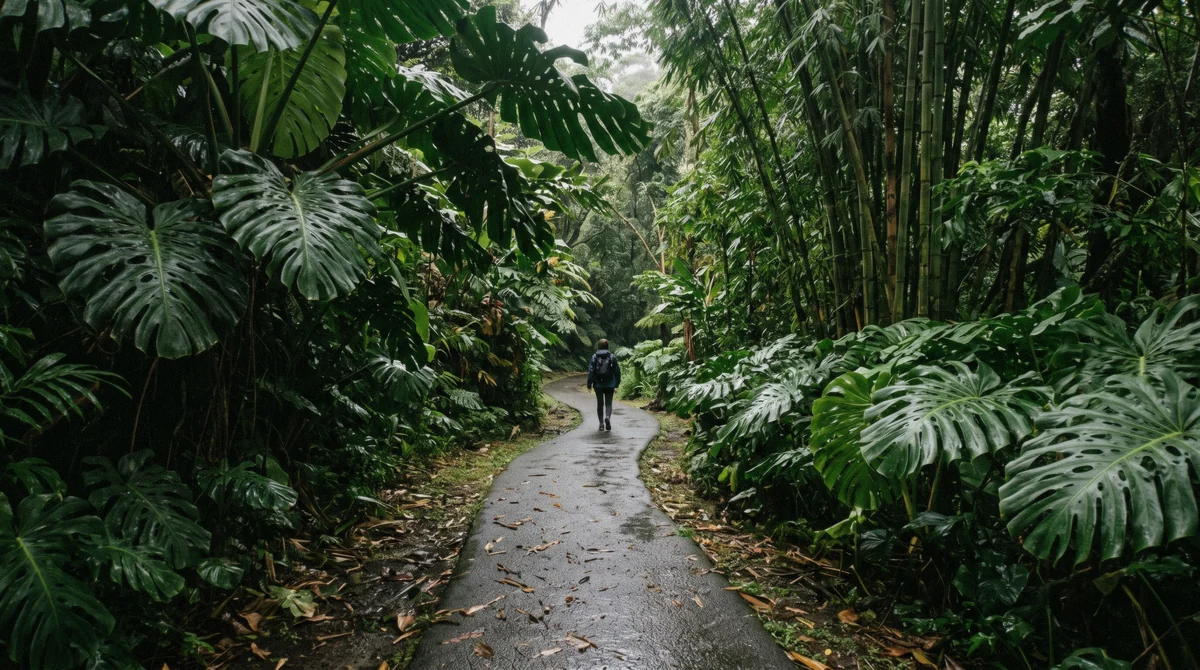
Most visitors assume rain ruins a waterfall day. In Hilo it's the opposite. Rainbow Falls and ʻAkaka Falls aren't fed by rain falling on the tourist looking at them, they're fed by rain falling for days beforehand, high on the slopes of Mauna Kea, that works its way down through the Wailuku River watershed.
That's why the river can be roaring under a clear blue Hilo sky the morning after an overnight storm upcountry, and why a stretch of dry, sunny days down in town can leave the same fall running noticeably thinner even with the sun out. If you're checking a forecast before you commit to a date, a rainy night is the good omen, not the bad one.
Best Time of Day
Time of day matters as much as time of year, maybe more. The mist below Rainbow Falls catches the morning sun at the right angle for a rainbow roughly between 9:00 and 10:00am, which is also before the mid-morning wave of cruise-ship buses reaches the lookout. ʻAkaka Falls is worth reaching before 11:00 for the same reason: fewer people on the half-mile loop and softer light through the canopy. Afternoon showers are more common than morning ones most of the year, so an early start also improves your odds of a dry walk.
Tours with morning departures, like the Big Island half-day volcano and waterfalls tour, are built around this window rather than fighting it.
Crowds and Prices Through the Year
Merrie Monarch week, the week after Easter, is the one date on the calendar that genuinely changes the math. Hotel rooms sell out across Hilo and tour operators fill up well ahead of time, so book earlier than usual if your dates land that week. Cruise-ship mornings bring their own smaller crowd spike at Rainbow Falls whenever a ship is in port, regardless of season.
Summer school break brings moderate crowds spread across June through August. Tour prices themselves move less with the season than with how far ahead you book; the bigger seasonal swing is in airfare and hotel rates, which tend to dip in the April-May and September-October shoulders. For what the falls and tours actually cost by season, see what it costs to visit Hilo's waterfalls.
What If It Pours on Your Day?
Most Hilo rain arrives as a passing shower, not an all-day washout, so a wet forecast is rarely a reason to cancel. Guided tours here are built for the climate: the zipline tour near ʻAkaka Falls runs rain or shine, since a Hilo tour that stopped for every shower would never leave the dock. Free cancellation windows of 24 hours are standard across the tours on this list, so if the forecast genuinely worries you, you can usually re-book without losing money.
And if it rains the night before your tour, that's the rain filling the falls you're about to see, a good sign, not a bad one.
The Best Month If You Only Have One Morning
If I had to rank the single best morning of the year to stand at Rainbow Falls, it would go like this:
- 1. March, for near-peak flow before the festival crowds fully arrive
- 2. November, for the year's fullest falls, if you don't mind packing a shell
- 3. April, for strong holdover flow with noticeably lighter crowds
- 4. February, for a reliable middle ground of flow, weather and quiet
The Worst Time to Visit (Honestly)
There isn't a true avoid-this-month answer, but if I'm being straight with you, late November into December is the hardest stretch, when kona storms are most likely to bring multi-day downpours rather than the passing showers typical of the rest of the year. For a waterfall chaser or a photographer, that's still a fine trade, arguably the best flow of the year. For anyone combining the falls with beach days, hiking elsewhere on the island, or an outdoor wedding, a multi-day soak eats into those plans in a way it won't for someone whose whole itinerary is built around the falls themselves.
So, When Should You Go?
November through April is the best window to visit Hilo waterfalls, when consistent rain on Mauna Kea keeps the Wailuku River and every fall it feeds running at full strength, and a morning arrival lines you up with the rainbow window in the mist. June through August is the honest runner-up, trading some of that power for drier trails and simpler logistics with kids. There's no calendar month that rules out a good waterfall day here, only trade-offs between flow, crowds and how much rain gear you want to carry.
Whatever window you land on, it's worth building your day around the morning hours, and browsing the full lineup of Hilo Hawaii waterfall tours before you commit to a date.
Curious which falls you will actually see and how tall each is? Our rundown of what waterfalls to see in Hilo covers all eight.
Frequently Asked Questions
Is June too dry to see the waterfalls?
No, but expect a thinner Rainbow Falls after a dry stretch. June is the lowest-rainfall month on average, and the falls never run dry, but the volume most photos show is more typical of the wet season.
How far ahead should we book during Merrie Monarch week?
As early as your dates are set. Merrie Monarch week, the week after Easter, fills Hilo's hotel rooms and tour slots well in advance, and last-minute bookings for that week are the hardest to find all year.
Does it rain every day in Hilo?
It rains on something like 275 days a year in Hilo, but most of that falls as overnight or passing showers, so an entire trip rained out is uncommon even in the wettest months.
When is hurricane season in Hilo and does it matter?
Officially June through November, but direct hits on the Big Island are rare. Still worth watching the forecast if your trip falls in that window, more for general planning than for waterfall viewing.
Is morning or afternoon better for Rainbow Falls?
Morning, specifically 9:00 to 10:00am, when the sun angle lights the mist for a rainbow and the cruise-ship crowd hasn't arrived. Afternoon showers are also more common than morning ones most of the year.
When are flights and hotels to Hilo cheapest?
The April-May and September-October shoulders tend to run cheaper on airfare and hotels than summer or the December holidays. Tour prices barely move by season, they're driven more by how far ahead you book.
I've walked out to Rainbow Falls in January downpours and June dry spells, and the honest truth is that the rain you're dreading is usually the reason the falls look the way they do in the photos that brought you here in the first place.