What to Wear & What to Bring for Hilo's Waterfalls

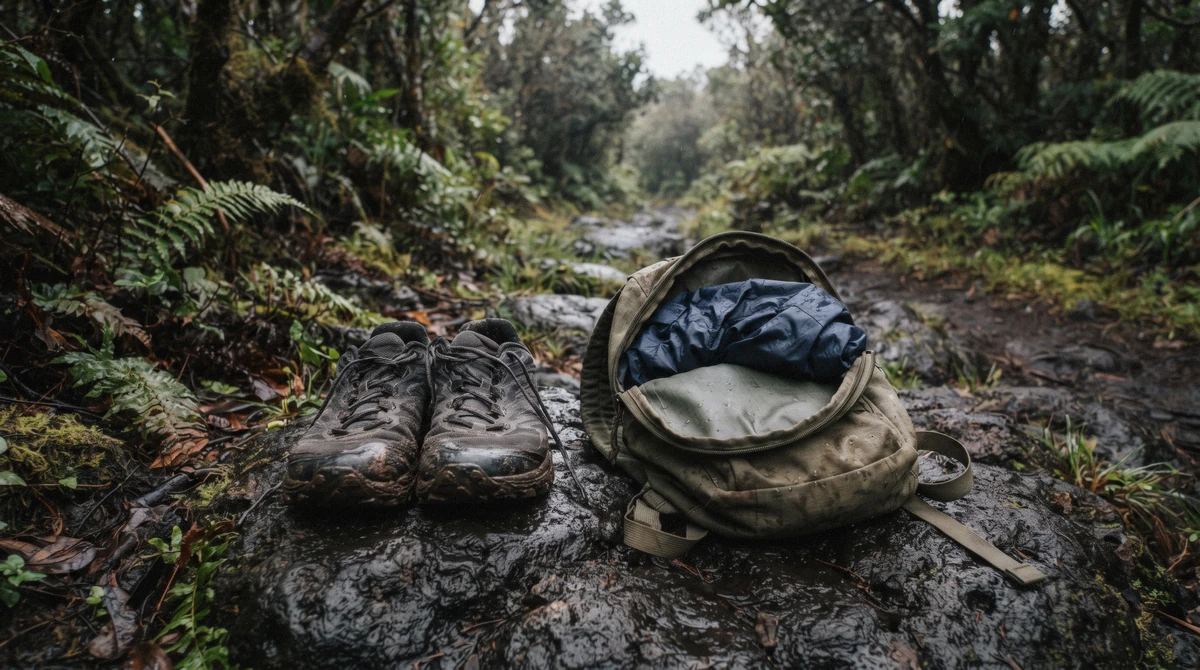
Planning a visit through our Hilo waterfalls tour resource? What to wear for Hilo waterfalls comes down to quick-dry layers, grippy closed-toe shoes and a light rain shell, since cotton and flip-flops are the two things that make an easy trail miserable here. Most tours already cover the transport, some gear and even a few meals, so your own packing list stays short. The one local wrinkle worth knowing before you pack: a Hilo waterfall day often means two climates in a single morning, 80°F humidity down at the falls and a windy 55 to 65°F up at the volcano summit most tours also visit, so what you wear needs to work for both.
Quick answer
Tours handle transport, and some cover lunch, snacks or gear like zipline harnesses, so your own packing list is short: quick-dry clothes, grippy closed-toe shoes, a light rain shell and reef-safe sunscreen. The one local twist is that a waterfall day often swings between 80°F humidity at the falls and a windy 55 to 65°F at the volcano summit most tours also stop at, so pack for both.
Key takeaways
- Tours provide transport and, on several, lunch, snacks or zipline gear, so your personal list stays short
- Quick-dry synthetics beat cotton, which stays wet for hours in Hilo's humidity
- Skip flip-flops on the trails, the paved loop paths stay wet and slick most of the year
- Hilo averages around 142 inches of rain a year, so a light rain shell earns its place in every bag
- Most waterfall tours also climb to the volcano summit, typically 15°F cooler and often windy
- Hawaii law bans the sale of sunscreen with oxybenzone or octinoxate, bring reef-safe mineral sunscreen
What to Wear
Base Layer
A quick-dry T-shirt and shorts or leggings work better here than the cotton tee you might reach for at home. Cotton soaks up humidity and stays damp for hours in Hilo's air, which gets uncomfortable fast once you're a mile into a trail. Quick-dry synthetics or merino wool dry against your skin in a fraction of the time.
Rain Layer
A light rain shell beats an umbrella on any of these trails, since you need both hands free on wet stone steps and narrow boardwalks. Most Hilo showers pass in minutes, so you're rarely wearing it for long, but going without one on a wet morning means finishing the hike soaked through.
The Volcano-Summit Layer
This is the one most visitors miss. Several waterfall tours also climb up to Kīlauea at roughly 4,000 feet, typically 15°F cooler than Hilo and often sitting in the 55 to 65°F range with real wind. Pack a warm layer, a fleece or a windbreaker, even if you're visiting in August.
The move is to dress for the falls, then peel on a layer for the summit, then peel it back off once you're back down at sea level.
Footwear
Grippy trail shoes or closed sneakers are the default choice, since the paved loop paths at ʻAkaka Falls and the lookout at Rainbow Falls stay wet and slick most of the year even though they're paved. Water shoes earn their keep on the one tour that includes an actual swim. Flip-flops, or what locals here call slippers, are fine for the car and the parking lot, but not for the wet lookout paths themselves.
The zipline tour near ʻAkaka Falls requires closed-toe shoes specifically, no exceptions, since you can't clip into the harness gear in sandals.
A quick color guide, since it comes up more than you'd think when people are packing for a trip like this:
| Color | How it holds up here |
|---|---|
| White | Shows red dirt and mud within minutes on any of these trails, not the best pick |
| Black | Runs hot in open sun at the lookouts, fine under the rainforest canopy |
| Bright colors | Hold up fine, and make it easy to spot your group in a photo at the falls |
| Earth tones | Hide trail mud and red dirt better than any other color group |
| Quick-dry synthetics | The real rule that matters more than color, dry fast against skin |
| Light-colored rain shell | Easier to see on a grey, rainy day if your group gets spread out |
None of this is about looking a certain way on the trail, it's about what actually survives a wet Hilo morning and dries out again before your next stop.
What to Bring
Beyond what you wear, here's the short list worth packing in a daypack before you head out:
- Reef-safe mineral sunscreen, the only kind legally sold here
- Light rain shell, showers pass through most days
- Warm layer, the volcano summit runs cold
- Water shoes, for wet stone and stream rocks
- Towel and swimsuit, for the one legal swim stop
- Dry bag or zip pouch, for mist and sudden downpours
- Mosquito repellent, for the rainforest gorges
- Reusable water bottle
- Small cash, some Honomū bakery stalls skip cards
- Reusable bag, single-use plastic bags are banned here
- Phone lanyard or grip, for wet railings and misty lookouts
The Sunscreen Law
Hawaii Act 104 bans the sale of sunscreen containing oxybenzone or octinoxate, in effect since January 2021, so if you forget sunscreen at home, what you'll find on shelves in Hilo is already reef-safe mineral sunscreen. Bring your own if you have a brand you trust, or buy it here without worrying about the ingredient list.
The Dry Bag
Mist at Rainbow Falls and the occasional downpour at ʻAkaka Falls can catch a phone or camera off guard faster than you'd expect. A simple zip-top dry bag or even a sandwich bag is enough to keep electronics dry between shots.
What Hilo Tours Provide (So You Don't Overpack)
Here's what's typically covered on a Hilo waterfall tour versus what's still on you to pack:
| Item | Usually provided | Bring your own | Notes |
|---|---|---|---|
| Van transport | Yes, on every tour | Hotel pickup included on several tours | |
| Lunch | Yes, on some tours | Snacks for others | Included on the volcano, waterfalls & beach tour |
| Snacks and drinks | Yes, on the swim tour | The waterfall hike and swim includes food and drinks | |
| Zipline equipment | Yes, all gear and helmets | Closed-toe shoes only | See the zipline tour near ʻAkaka Falls |
| Park entry fees | Yes, on some tours | Check your specific tour | Varies by operator, confirm before you go |
| Rain gear | No | Light rain shell | Showers are common most of the year |
| Towel | No | Pack your own | Needed for the swim stop |
| Water shoes | No | Pack your own | Wet stone and stream rocks |
| Sunscreen | No | Reef-safe mineral sunscreen | Required by state law here |
| Warm layer for the summit | No | Pack a fleece or windbreaker | The volcano runs 15°F cooler than Hilo |
What NOT to Wear or Bring
A short list of what to leave behind or leave in the car:
- Flip-flops on the lookout trails, the wet paved paths are slicker than they look
- Cotton-only outfits, they stay damp for hours in Hilo's humidity
- Sunscreen with oxybenzone or octinoxate, it's illegal to sell here and best left at home too
- Open cuts near freshwater streams, leptospirosis is a real risk, see our note in the waterfalls without a tour guide
- Valuables left visible in a parked car, take them with you instead
- A drone, state parks here require permits most visitors don't have, skip the hassle
- Single-use plastic bags, the county has banned them
- Loose jewelry near any stream swim stop
Packing by Season
What you pack shifts a little with the season, mostly around rain gear and layers:
| Season | Wear this |
|---|---|
| Winter (November-February) | Quick-dry base layer, a real rain shell, and a warm mid-layer for the summit |
| Spring (March-May) | Same quick-dry base, a lighter shell, and festival-week town clothes if visiting during Merrie Monarch |
| Summer (June-August) | Lightest kit of the year, a sun hat, and a swim kit for the one tour that allows it |
| Fall (September-October) | Light kit plus a packable shell, rain is moderate but still worth planning for |
Winter brings the heaviest rain, with November alone averaging close to 17 inches, while June sits at the dry end near 8.5 inches, so a rain shell matters most from November through April. For the full month-by-month breakdown behind these numbers, see the best time to visit Hilo waterfalls.
Dress for Both in One Day
Most waterfall tours here also stop at the volcano, which means your morning swings through two different climates. A typical rhythm looks like this: 7:30am hotel pickup in Hilo's warm, humid 70s, light quick-dry clothes are enough. By 11:00am you're at the Kīlauea summit around 4,000 feet, where it's often 55 to 65°F and windy, and the warm layer you packed comes out of the bag.
By 2:00pm you're back down near the falls, humidity climbing again, and the rain shell you packed becomes the thing you actually reach for if a shower rolls through. Layers you can peel on and off, rather than one outfit built for a single temperature, are what actually work for a day shaped like this.
Packing for Kids
Bring a full quick-dry change of clothes for kids, since they will get wet whether or not the itinerary includes a swim stop. Kid-size water shoes make the stream sections easier than bare feet or sandals. The winding stretch of Highway 220 toward ʻAkaka Falls can bring on motion sickness for some kids, so pack anything that helps and plan for a slower pace on that drive.
Snacks between stops go a long way on a half-day or full-day tour. For the swim tour, flotation is provided, worth confirming directly with your operator if a young swimmer in your group needs it.
Frequently Asked Questions
Can I wear jeans on a Hilo waterfall tour?
You can wear them in the van, but they're the wrong call on the trails themselves. Jeans soak through in the humidity or a passing shower and stay heavy and cold once you're up at the volcano summit. Quick-dry pants or shorts work better for the whole day.
Can I wear shorts to the waterfalls?
Yes, quick-dry shorts are a solid choice for the falls themselves in most weather. The one caveat is the volcano summit stop that several tours include, where a warm layer over shorts is worth having ready even in summer.
Do I need water shoes for Rainbow Falls?
No, the lookout at Rainbow Falls is a paved path, so regular closed-toe shoes are fine. Water shoes matter for the tour that includes an actual stream swim, not for the drive-up lookouts.
Is a wetsuit needed to swim at the falls?
No. The waterfall pools run a consistent 65 to 70°F year round, and the guided swim stop is short enough that most visitors are comfortable without one.
What sunscreen is allowed in Hawaii?
Hawaii Act 104 bans the sale of sunscreen containing oxybenzone or octinoxate, in effect since January 2021, so any sunscreen sold on the islands is already reef-safe mineral sunscreen.
Will my phone survive the mist at the falls?
Most likely yes for a quick visit, but a cheap zip-top dry bag removes the guesswork during a downpour or when you're standing right in the mist zone below the falls.
None of this is complicated gear. A quick-dry shirt, real shoes, a packable rain shell and a warm layer for the summit cover almost every waterfall day I've guided here, whatever the season. Pack that much and you're ready for any of the waterfall tours on the Hilo side of the island.