Is It Safe to Visit Hilo's Waterfalls? Honest Answer + Who Should Take Care

Planning a visit through our Hilo waterfall day tours resource? Is it safe to visit Hilo's waterfalls? On a guided tour, yes: the small-group operators running these day trips have no fatalities tied to their vans, and the vehicles run with free cancellation and licensed drivers. The real danger here isn't the tour, it's the water itself, and it's a real one: 27 people have drowned at the Wailuku River's Boiling Pots and Rainbow Falls over the past 29 years, almost all of them trying to swim or wade where swimming is prohibited. I've guided hikes and driven this stretch of road for years, and this guide separates the two questions cleanly: how safe the tours actually are, and what makes the water dangerous enough that even confident swimmers should stay behind the rail. It also covers who should think twice, from the zipline's weight limit to the winding drive from Kona.
Quick answer
Guided Hilo waterfall tours are statistically very safe: licensed, small-group operators with free cancellation and no fatalities tied to the vans themselves. The real risk is the water, and it's a documented one, not a scare tactic.
Key takeaways
- Guided tours run with licensed small-group operators and free cancellation; no fatalities are tied to these van tours
- 27 people have drowned at the Wailuku River's Boiling Pots and Rainbow Falls over the past 29 years; swimming is prohibited there for a reason
- The top rule that matters most: stay behind the railing and never enter the river, no matter how calm it looks
- The drive from Kona crosses the Saddle Road to roughly 6,500 feet, with fast-changing weather; leave before dusk if you're driving back
- Extra care applies to weak swimmers, anyone with a recent ankle, knee, or back surgery (the zipline's screening), and drivers unfamiliar with mountain roads
- The full restriction table below covers each tour type, condition by condition
The Kinds of Safety, Separated
Water safety (the big one)
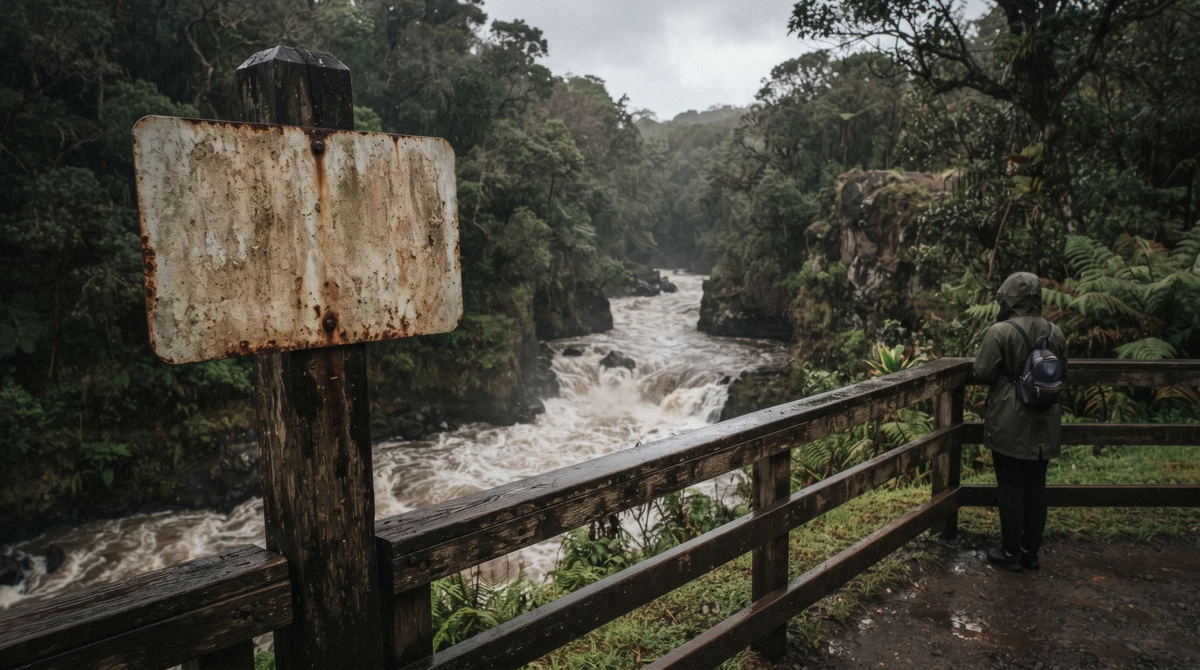
This is where the real risk lives. Swimming is prohibited at Rainbow Falls and Boiling Pots inside Wailuku River State Park, and the reasons are physical, not bureaucratic: invisible currents beneath a calm-looking surface, submerged lava tubes that can trap a swimmer, and flash-flood surges that arrive from rain falling miles away on Mauna Kea, sometimes under a clear blue Hilo sky. We cover this in full below.
Visitor safety at the lookouts
The paved overlooks themselves are low-risk: railed viewpoints, wet in the rain but not technical. The rules are simple and they work: stay on the paved path, stay behind the rail, and treat slick basalt near any edge as wet even when it looks dry.
Driving safety
The Saddle Road (Daniel K. Inouye Highway, Route 200) from Kona climbs to about 6,500 feet with weather that shifts fast, and long stretches with no gas stations or cell service. Highway 220 up to ʻAkaka is narrower and often wet. Neither is dangerous if you drive during daylight and respect the conditions; both punish someone in a hurry after dark.
Health
Leptospirosis is present in Hawaiian freshwater, so any open cut stays out of the river regardless of how tempting a pool looks. Whether you need prophylaxis for a specific trip is a travel-clinic conversation, not something a blog post should decide for you.
Is Hilo itself safe?
As a town, generally yes; Hilo is small and low-crime by most measures. The real visitor risks here are the water and mountain driving, not street crime, though rental cars parked at waterfall lookouts do see occasional smash-and-grab break-ins (more on that below). For destination-level advisories, the US State Department (travel.state.gov) is the right source, not a tour blog.
Emergency Numbers and Medical Care
Call 911 for any emergency in Hilo, it works from any phone. Hilo Medical Center is the nearest hospital equipped for serious care and sits a short drive from both Rainbow Falls and downtown. Hawaiʻi's Division of State Parks (DLNR) posts current park rules and hazard signage at Wailuku River State Park; check dlnr.hawaii.gov/dsp/parks/hawaii/wailuku-river-state-park/ before you go if you want the source rather than a summary., no operator suspensions or regulatory alerts are in effect for any of the tours covered on this site.
The Safety Record: What the Water Has Taken
Twenty-seven people have drowned at Boiling Pots and Rainbow Falls over the past 29 years, according to state figures, and the Wailuku River accounts for roughly a quarter of all river drownings recorded statewide. That's not a rounding error. Nearly every case follows the same pattern: someone enters water that looks calm from the bank, and finds a current, a submerged lava tube, or a sudden surge that a strong swimmer in a swimming pool would never expect.
The name itself is a clue few visitors know: "Wailuku" translates roughly as "waters of destruction," a name the river earned long before it had a parking lot. Compared with an everyday risk, driving the Saddle Road in daylight is closer to routine mountain driving than a hazard; entering the Wailuku River is a different category of risk entirely, closer to swimming near a dam spillway than a swimming hole. What's changed recently: new warning signage went up in 2025 after continued incidents, and starting the state parks moved to card and QR-code-only fee payment, part of a broader push toward managed, monitored access rather than an open, unstaffed lookout.
Source: Hawaiʻi DLNR Division of State Parks, dlnr.hawaii.gov/dsp/parks/hawaii/wailuku-river-state-park/. We won't name individual incidents here; the pattern and the state's own numbers make the point on their own.
What Makes the Tours Safe: Rules and Operators
DLNR sets the rules at the state parks: no swimming at Rainbow Falls or Boiling Pots, stay on the paved paths, and posted signage marks the hazard zones clearly since the 2025 update. The tour operators covered on this site are licensed, small-group companies, generally capped around 12 guests, and they offer free cancellation rather than a locked-in, non-refundable slot.
Most of these tours run rain or shine; Hilo's rain is frequent enough that a tour built around clear skies would rarely operate. Operators do cancel for genuine hazards, a closed park road or a flash-flood advisory, rather than running through them. Honestly, at the lookouts themselves, your own choice to stay behind the rail is the main safety lever, more than any rule the operator enforces for you.
The Real Risks and How to Manage Them
Five real risk mechanisms around Hilo's waterfalls, each paired with the mitigation that actually works.
| Risk | What it looks like | How to manage it |
|---|---|---|
| Entering the Wailuku River at Rainbow Falls or Boiling Pots | A current or submerged lava tube pulls a swimmer under with no visible warning | Never enter the river at either site; the ban exists because the current is invisible from the bank |
| Flash flooding after rain upstream | Water rises fast at the falls even under a clear Hilo sky, because the rain fell miles away on Mauna Kea | Skip a visit after heavy upstream rain, and heed posted flash-flood warnings immediately |
| Wet lava rock at the overlooks | Slick basalt near any unrailed edge, especially after rain | Wear grippy, closed-toe shoes and stay on the paved path |
| Saddle Road weather changes | Fog, wind, and temperature swings between Kona and Hilo at 6,500 feet | Drive in daylight, fuel up beforehand, and leave enough buffer to avoid a rushed return after dark |
| Car break-ins at waterfall lookouts | Smash-and-grab theft from rental cars left at trailhead-style parking | Take valuables with you rather than leaving them visible in the car |
The car break-in risk above is a property concern, separate from the physical-safety issues that make up most of this guide, but it's common enough at popular lookouts to plan around.
How to Choose a Safe Waterfall Tour in Hilo
Green flags worth watching for: a licensed operator who briefs guests clearly before any water-adjacent stop, a small group size (this site's tours cap around 12), free cancellation, and a driver who treats Saddle Road weather with respect rather than urgency. Red flags: vague waivers, no mention of water rules before a river stop, or a driver in a visible hurry on a wet mountain road.
For a full day built around the volcano and Rainbow Falls with a licensed small-group operator, the Volcano National Park and Rainbow Falls day tour and the half-day volcano and waterfall tour both fit that description. If the water itself is what draws you, the guided waterfall hike and swim with a Native Hawaiian guide is the one legal, supervised swim option covered on this site, on private trails rather than the state park's prohibited stretch. Compare the full range of guided waterfall tours around Hilo before you book.
Who Should Take Extra Care: Restrictions at a Glance
Every line below reflects a real, sourceable rule from the operators and parks covered on this site, not an invented one.
| Restriction | Typical rule on Hilo tours | Why it exists | Ask before booking if... |
|---|---|---|---|
| Swimming ability | No formal test, but the state-park falls are off-limits to swimming entirely; the one legal swim (private trails) still involves wading in moving water | Currents and submerged lava tubes make even confident swimmers vulnerable | You're not a strong, comfortable swimmer and are considering the guided swim hike |
| Minimum age | Zipline: ages 12 and under must be with an adult (13+) | Younger riders need direct adult supervision on the course | You're traveling with a child near that line |
| Weight | Zipline: 40 to 260 lbs, weighed at check-in with no refund if outside range; riders 40-69 lbs go tandem with a guide on the last three lines | The zipline harness system has hard mechanical limits | You're near either end of that range |
| Recent surgery or back issues | Zipline: no recent ankle, knee, or back surgery | The course requires stable footing and some physical exertion | You've had recent joint or spinal surgery |
| Mobility | Van tours are wheelchair- and senior-accessible with minimal walking; the zipline requires walking about 0.5 mile of uneven terrain | Some stops involve short walks over natural, uneven ground | You have limited mobility and are booking the zipline specifically |
| Pregnancy | No ban on the van tours; the zipline is a direct conversation with the operator and your doctor | Harness-based activities carry different considerations than a seated tour | You're pregnant and considering the zipline |
| Closed-toe shoes | Required for the zipline; strongly recommended at every wet, paved lookout | Open shoes offer no grip on wet basalt or the zipline platform | You only packed sandals |
What If Something Goes Wrong
Someone slips near the railing at a lookout
What happens: wet basalt near an unrailed edge is the most common minor-injury spot. What the crew does: guides on van tours keep groups on the paved path and call out slick sections. What you do: wear grippy shoes and treat any rock near water as wet, even when it looks dry.
A flash-flood warning is issued while you're at the falls
What happens: rain far upstream on Mauna Kea can raise the river fast, sometimes under clear Hilo skies. What the crew does: guided tours move groups back from the water's edge and away from the area if conditions warrant it. What you do: heed any posted warning or ranger instruction immediately, and don't wait to see if the water actually rises before backing away.
A medical issue comes up on the swim hike
What happens: the wading and short wet-trail walk on the guided swim is more physically active than a van tour. What the crew does: the native Hawaiian guide leading that tour knows the trail and can shorten or adjust the route. What you do: disclose any relevant condition honestly when booking, since that's the detail a guide can't see for themselves.
Across all three scenarios, the one lever you fully control is staying out of the river itself. Everything else on this list is manageable with ordinary care; the water at Rainbow Falls and Boiling Pots is the one place where caution has to be absolute, not just careful.
Safer Ways to Enjoy the Falls If the Water Isn't for You
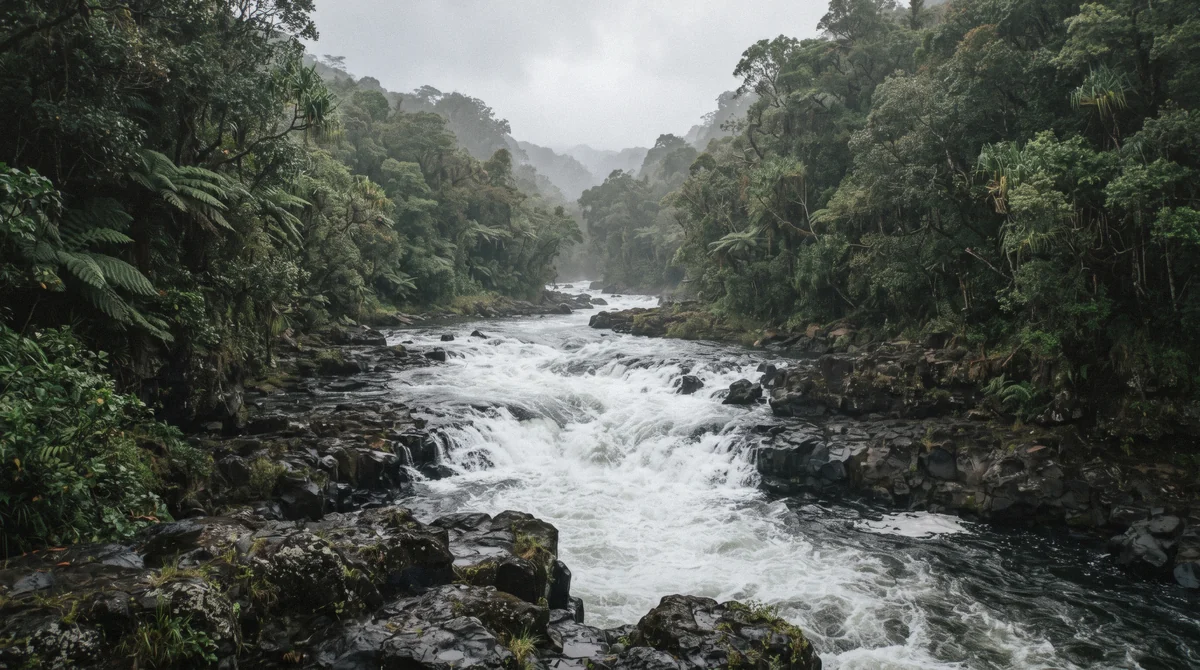
If the river's reputation is enough to keep you on dry land, that's a reasonable call, and Hilo's waterfalls still work fine without ever touching the water. The paved, drive-up lookouts at Rainbow Falls and ʻAkaka Falls need no swimming at all; see seeing the falls on your own for the self-drive version. If you do want a legal, supervised swim, the guided waterfall hike and swim with a Native Hawaiian guide is the one option on this site built for exactly that, on private trails away from the state park's prohibited stretch.
Traveling with children? See our honest breakdown of Hilo waterfalls with kids for age-specific guidance, and check the best months to visit if timing is part of your planning.
Frequently Asked Questions
Has anyone drowned at Hilo's waterfalls?
Yes. State figures show 27 drownings at Boiling Pots and Rainbow Falls over the past 29 years, nearly all tied to swimming or wading where it's prohibited. See the safety record section above for the full context and source.
Can you swim at Rainbow Falls or Boiling Pots?
No, swimming is prohibited at both sites inside Wailuku River State Park. The one legal, supervised swim covered on this site is on private trails with a native Hawaiian guide, see the guided swim hike.
Is the zipline near Akaka Falls safe?
It runs with a weight range of 40 to 260 lbs (weighed at check-in), a requirement to walk about 0.5 mile of uneven terrain, and exclusions for recent ankle, knee, or back surgery. Within those limits, it operates as a standard commercial zipline course.
Is it safe to drive from Kona to the waterfalls?
Yes, in daylight. The Saddle Road climbs to roughly 6,500 feet with fast-changing weather and long stretches with no services; leave Hilo before dusk if you're driving back to Kona the same day.
Is Hilo a safe town to visit?
Generally yes, Hilo is a small, low-crime town by most measures. The real visitor risks here are the water and mountain driving rather than street crime, though rental cars at waterfall lookouts do see occasional break-ins. For destination-level advisories, check travel.state.gov.
What should you do if a flash flood warning is issued at a waterfall?
Move away from the water's edge immediately and follow any ranger or posted instruction. Don't wait to see if the water visibly rises first; the surge can arrive faster than it looks.
Are the guided tours themselves dangerous?
No. The licensed small-group operators covered on this site have no fatalities tied to their van tours. The documented risk in Hilo is specific to unsupervised river entry, not the tours.
The honest answer holds up either way you look at it: the guided tours around Hilo are safe by any reasonable standard, and the water at Rainbow Falls and Boiling Pots is genuinely dangerous, with 27 drownings in 29 years to back that up. Stay behind the rail, respect posted warnings, and drive the mountain roads in daylight, and there's very little left to worry about.